
Spur Gears vs. Helical Gears: A Practical Selection Guide
Spur Gears vs. Helical Gears: How to Choose for Your Application
Choosing between spur gears and helical gears starts with the requirements of the complete transmission. Operating speed, noise expectations, shaft support and installation space all matter when reviewing a gear design.
For buyers sourcing custom gears, the goal is to select a configuration that fits the application and can be clearly defined in a drawing. This guide focuses on spur gears and conventional single-helical gears used with parallel shafts.
What Is the Difference Between Spur and Helical Gears?
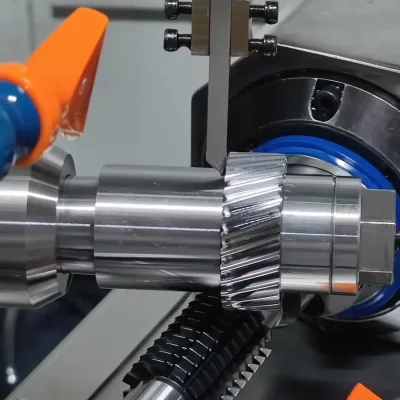
Spur gears have teeth that run parallel to the gear axis. Helical gears have teeth cut at an angle to the axis.
This difference affects how the teeth engage and how forces are transmitted through the assembly. Helical gearing can provide smoother engagement, while its angled teeth also introduce axial thrust that the shaft and bearing arrangement must accommodate. Technical reference: KHK Helical Gears
Noise and Smooth Operation
If operating noise is an important requirement, helical gears are worth evaluating. Their overlapping tooth engagement can help reduce noise and vibration compared with a comparable spur gear arrangement. Reference: KHK Helical Gear Catalog
However, gear type alone does not determine how quiet a finished assembly will be. Manufacturing accuracy, tooth contact and tooth surface condition also influence gear noise. A helical gear should therefore not be treated as an automatic solution to a noisy transmission. Reference: KHK Spur Gear Technical Information
When requesting a quotation, describe the operating conditions and any noise acceptance requirements rather than simply asking for a “quiet gear.”
Axial Thrust and Bearing Support
Conventional helical gears generate axial thrust during operation. The design must account for that force, including its direction and how it is carried by the bearings and housing. Technical reference: KHK
Spur gearing does not generate axial thrust from the nominal tooth load. The gears still require appropriate positioning and retention on their shafts. Technical reference: KHK
Before replacing an existing spur gear with a helical gear, arrange an engineering review of the complete gear pair and its supports. Matching the outside diameter and bore is not enough to establish compatibility.
Start with the Application Requirements
Prepare a short operating specification before comparing designs. Useful information includes:
- Input and output speeds
- Required torque and duty cycle
- Available space and shaft arrangement
- Noise and vibration requirements
- Lubrication and operating environment
- Target service life and inspection requirements
Identify which requirements are fixed and which can be discussed. For example, a replacement component may need to retain an existing bore and mounting arrangement, while a new assembly may allow changes to the shaft support.
Compare Quotations Against the Same Specification
Avoid selecting a gear solely by its unit price or tooth appearance. Ask suppliers to quote against the same drawing revision, material, treatment, quantity and inspection requirements.
For a proposed alternative design, request a clear explanation of what changes. This makes it easier to assess the complete purchasing decision, including any additional work required on mating parts or assembly components.
If you are unsure which gear type to specify, provide the available application information and request a design review before confirming production.
Information to Include in a Custom Gear Inquiry
To support a useful technical discussion, prepare:
- A dimensioned drawing and revision number
- Gear type and number of teeth
- Module or diametral pitch, with the convention clearly identified
- Pressure angle and face width
- Helix angle and direction, if applicable
- Bore, hub, keyway and other mounting features
- Material, treatment and critical tolerances
- Details of the mating gear
- Required quantity and delivery destination
Mark any unknown specifications clearly. Do not estimate missing dimensions and present them as confirmed requirements.
Discuss Your Custom Gear Project
Shenzhen Yongchengxin Precision Gear Co., Ltd. welcomes inquiries for custom gears and transmission components.
Explore our spur gear products and helical gear products, or contact our team to discuss your project.
You can also email your drawings, quantity and application details to vip@precisiongearmanufacturer.com.